Most weak SEO content has the same problem. It chases one phrase and forgets the full meaning behind the search.
That is where semantic SEO helps. When we build pages around intent, context, and related ideas, search engines can understand the topic better, and readers get a page that feels complete. The shift is simple once we see it in plain examples.
What semantic SEO means when we write for real people
Semantic SEO is the practice of building content around a topic, not around a single repeated phrase. We still start with keywords, and choosing right SEO keywords still matters. However, the keyword is only the starting point.
Search engines now look for context. If we write about "apple," they need clues to know whether we mean the fruit, the brand, or the company stock. Those clues come from nearby words, headings, examples, and related terms.
In other words, semantic SEO helps a page make sense as a whole.
A strong page answers the full question behind a search, not only the exact wording.
For example, a basic page targeting "dog food for puppies" may repeat that phrase ten times. A better page also mentions puppy nutrition, feeding schedule, breed size, ingredients, vet guidance, and age ranges. That extra context tells search engines, and readers, what the page is really about.
This is why semantic SEO is not about stuffing synonyms into a paragraph. It is about clarity. If we cover the right ideas in the right order, the page feels natural. For a deeper industry view, Search Engine Land's semantic SEO guide gives useful background on how meaning and context shape rankings.
The simple parts of semantic SEO that matter most
Several moving parts make semantic SEO work, but we can keep them simple.

First, there are entities. An entity is a thing search engines can clearly identify, such as "Google Analytics," "Nike," or "email marketing." When we write a page about email campaigns, related entities might include inboxes, subject lines, open rates, automation tools, and spam filters.
Next, there is search intent. We need to know what the reader wants. Are they learning, comparing, or buying? That is why aligning content with search intent sits near the center of good optimization.
Then we have related subtopics. These are the points people expect to see on a complete page. If our article is about "cold brew coffee," useful subtopics may include grind size, brew time, coffee-to-water ratio, storage, and taste differences.
Last, there is topical depth. This does not mean writing 3,000 words every time. It means covering the parts that help the reader finish the task.
A quick way to spot these elements is to scan the search results. Look at the top pages, the "People Also Ask" box, and common headings. Those clues show what the topic needs. If we want a deeper explanation of entities and topical authority, this entity-focused semantic SEO guide is a solid next read.
Before and after, turning a basic post into a semantically stronger page
A simple example makes this clear. Say we want to rank for "keyword research tips."
A weak version might do this:
- Repeat "keyword research tips" in the title, intro, and every subheading
- Give a short definition
- Offer vague advice like "use a tool" or "find low competition keywords"
That page mentions the phrase, but it leaves big gaps.
A stronger version would cover the topic more fully. It might explain seed keywords, search intent, SERP review, long-tail phrases, search volume, difficulty, and how to group terms into one page. It would also show one small example, so the reader can act on it.
This quick comparison helps:
| Version | What readers get |
|---|---|
| Keyword-only post | A repeated phrase with thin advice |
| Semantically stronger post | A complete answer with context, examples, and next steps |
The second version is easier to trust because it mirrors how people learn. We rarely search for a topic and want one phrase repeated back to us. We want connected answers.
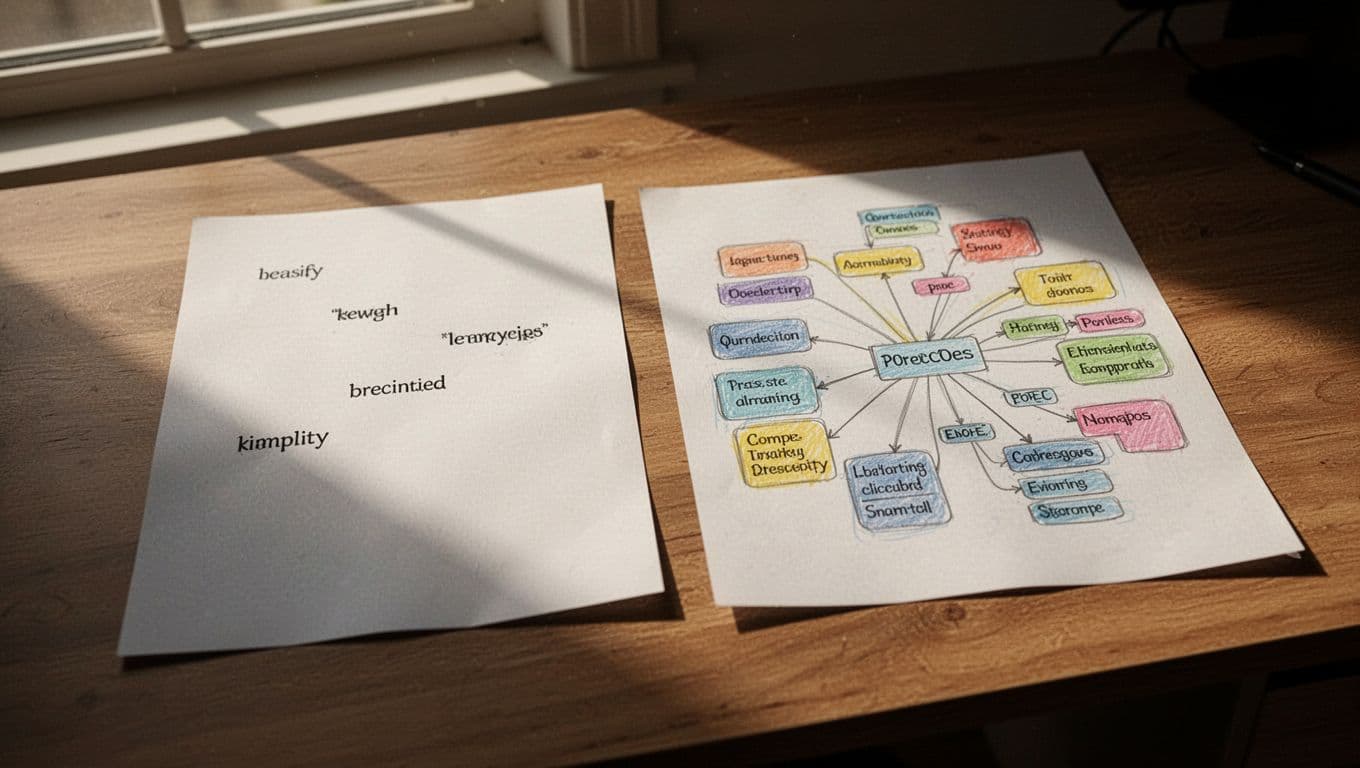
A good rewrite often looks like this:
- Start with the main intent behind the query
- Add headings that answer the most common follow-up questions
- Use natural terms readers expect on the page
- Include one example, table, or short process
- Cut empty repetition
That shift usually improves the page for both readers and rankings. It also supports improving content for better rankings because the page becomes clearer, more useful, and easier to scan.
A quick semantic SEO checklist we can use today
Before we publish a page, we can run this short check:
- Do we know the main intent behind the search?
- Did we include the key entities tied to the topic?
- Are the main subtopics covered with clear headings?
- Does the page teach, compare, or solve something fully?
- Have we removed repeated phrases that add no value?
If we can answer "yes" to those points, we are usually much closer to a semantically strong page.
Semantic SEO sounds complex at first because the label sounds technical. In practice, it means writing pages that make sense from top to bottom.
When we stop chasing one phrase and start covering the full topic, our content gets better. That is the real win. Search engines get clearer signals, and readers get pages worth staying on.