
An About page can do more for local search than many business owners expect. When people search for a dentist, HVAC company, law firm, salon, or restaurant nearby, they want proof before they book.
If our page sounds generic, it blends into the crowd. If it sounds local, specific, and real, it can help visibility and turn more visitors into calls, bookings, or walk-ins.
That is where about page SEO matters. We need a page that tells people who we are, what we do, where we work, and why they should believe us.
Why the About page matters in local search
Local search is built on trust. People do not click around for long when they need a service close to home. They scan for signs that we are real, nearby, and worth choosing.
Our About page is often the first place where those signs can line up. It supports the homepage, backs up our service pages, and gives searchers one more reason to stay on the site.
If we want a broader local SEO framework, our Local SEO guide for beginners fits well with this work. The About page is part of the same job, which is helping searchers understand our business fast.
If a visitor cannot tell who we are, where we work, and why we should be trusted, the page is missing its job.
That is the simple test. If we can answer those three things clearly, we are already ahead of most local competitors.
What a strong local About page should include
A good About page does not need a long story. It needs the right details in the right order.
Start with our business name, city, and main service. Then explain who we help, what we do, and what makes us dependable. The language should feel natural, not stuffed with repeated city names.
BrightLocal's on-page local SEO guide points to the same pattern, useful information, clear local signals, and easy ways to trust the business.
For local businesses, the strongest pages usually include:
- Years in business
- Owner or team member names
- Certifications, licenses, or memberships
- Awards or local recognition
- Service area mentions
- Community involvement
- Real photos of the team, office, storefront, or work
Those details matter because they are hard to fake. They make the page feel grounded. They give people a reason to stay longer and take the next step.
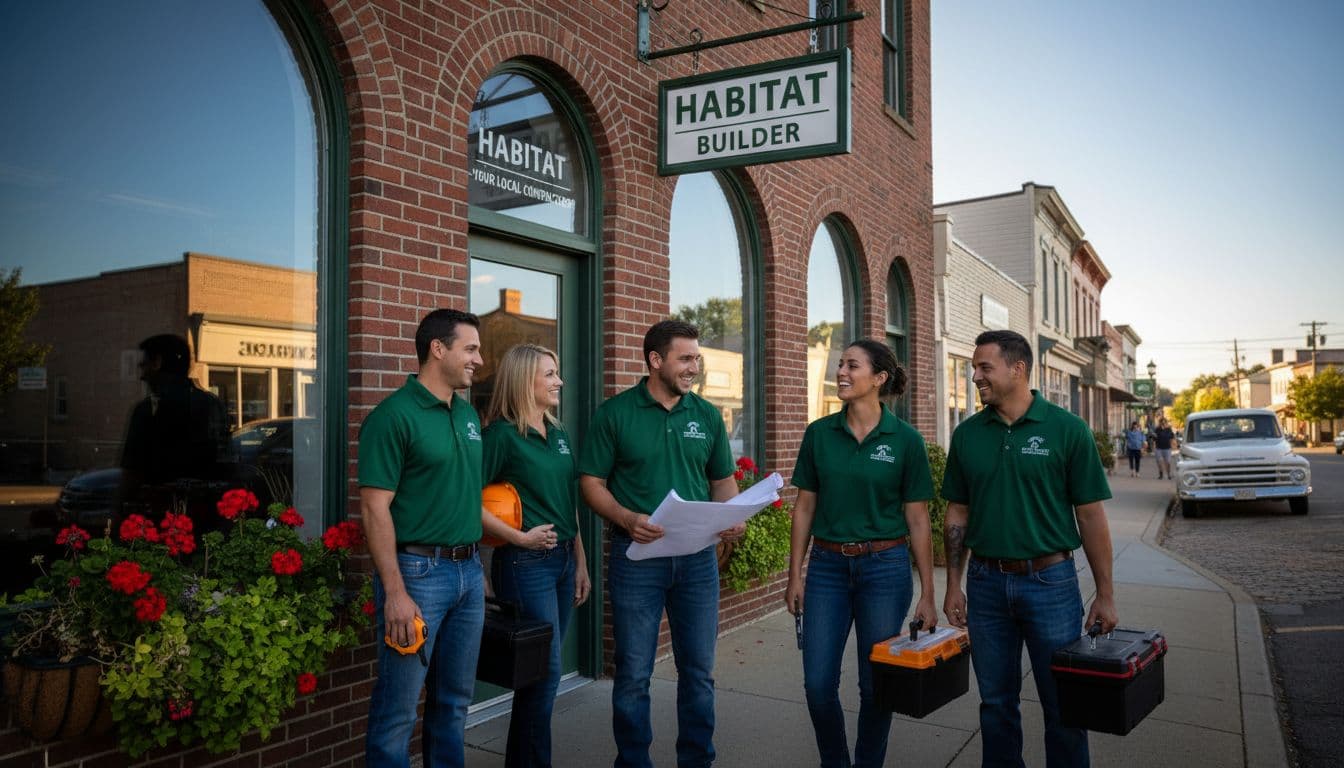
The page should also link to the rest of the site. We want clear paths to services, contact information, reviews, and location pages. That turns the About page into a helpful hub instead of a dead end.
How we can optimize the page step by step
A strong About page usually comes together in a few simple moves.
- Open with the essentials.
We should say who we are, what we do, and where we serve in the first paragraph or two. That gives both visitors and search engines a fast read on the business. - Add proof, not fluff.
Years in business, credentials, awards, and local memberships work better than broad claims. A sentence like "Serving Northern Kentucky since 2012" carries more weight than "We care about quality." - Write like local people talk.
We can name neighborhoods, nearby towns, or well-known landmarks when they fit naturally. That keeps the page specific without sounding forced. - Connect the page to the rest of the site.
Our homepage SEO checklist for local businesses helps us keep the homepage focused, while the local service page SEO guide shows how the About page should support the service pages. The pages should work together like a front door and hallway. - Keep business details consistent.
Our business name, address, phone number, and service area should match what appears on our Google Business Profile and contact pages. Small mismatches create confusion. - Use real images.
Team photos, office shots, storefront images, and project photos build more trust than stock photography. People want to see the business behind the page.
These steps are simple, but they are not small. They shape how the page feels, and how much confidence it creates.
What local About pages should look like in real life
The best About pages feel specific to the business type. A dentist does not need the same story as a restaurant. A law firm does not need the same proof as a salon.
Here is a simple way to think about it:
| Business type | What we should say | Proof that helps |
|---|---|---|
| Dentist | Family dental care in our city, with a focus on patient comfort | Years in practice, doctor bios, certifications, office photos |
| HVAC company | Heating and cooling service for local homes and businesses | Technician training, emergency response, years in business |
| Law firm | Legal help for clients in nearby communities | Attorney bios, bar memberships, case types, community work |
| Salon | Hair, color, and styling for local clients | Stylist names, training, awards, before-and-after photos |
| Restaurant | Food, people, and neighborhood roots | Owner story, chef profile, local ingredients, community events |
A dentist page might mention patient care, insurance help, and the neighborhoods we serve. An HVAC page might mention same-day repairs, seasonal maintenance, and nearby towns. A law firm page might highlight attorney experience and the counties we handle. A salon page can spotlight stylists, awards, and the kinds of looks clients ask for most. A restaurant page can talk about family history, signature dishes, and local roots.
For a practical local SEO discussion, we can also compare notes with a local SEO service discussion. The recurring theme is the same, clear service details and real trust signals win.
The goal is not to write a biography for the sake of it. The goal is to help nearby customers say, "Yes, this is the right place."
Do this, and skip that
Small changes can make the page much stronger. We do not need a long rewrite to get better results.
- Do mention the city, service area, and core services in plain language. Don't bury that information under brand language.
- Do include team names, roles, and years of experience. Don't leave the page anonymous.
- Do use awards, licenses, certifications, and memberships when we have them. Don't make vague claims like "best in town."
- Do link to services, reviews, contact, and location pages. Don't let the page become an island.
- Do use real photos of people and places. Don't rely on stock images that could belong to anyone.
- Do keep the page unique from the homepage and service pages. Don't copy the same paragraph across every page.
That last point matters a lot. Search engines need clear page differences, and visitors do too. If every page says the same thing, none of them works as hard as it should.
Quick checklist before we publish
Before we hit publish, we should ask a few simple questions:
- Does the first screen say who we are and where we work?
- Do we mention real people, real experience, and real proof?
- Have we included our service area in a natural way?
- Do we link to the pages people need next?
- Are our details consistent with our Google Business Profile?
- Does the page sound like our business, not a template?
If we can answer yes to most of those, the page is in strong shape. If not, we know exactly where to tighten it up.
Conclusion
A strong local About page does not need fancy writing. It needs clarity, proof, and local detail. That is what helps people trust us when they find us in search.
When we treat the page like a trust-builder instead of a filler page, it starts doing real work. It supports local visibility, strengthens the site, and gives nearby customers a reason to choose us.