A link can do more than move us to another page. The words inside that link shape trust, clicks, and search visibility before anyone lands on the next page.
When we ignore anchor text, we make people guess. When we write it well, we help users and search engines understand what comes next. That's why anchor text seo still matters in 2026, especially now that Google reads links in context, not as isolated keywords.
What anchor text means in SEO
Anchor text is the clickable text inside a hyperlink. In the sentence "See our internal linking SEO guide for examples," the anchor text is "internal linking SEO guide."
Think of it like a sign on a hallway door. The room matters, but the sign tells us whether that room is worth entering. Good anchor text gives a clear hint about the destination page. Poor anchor text hides that clue.
If the visible link is a raw URL, the anchor is the URL itself. That's fine at times, but descriptive text usually helps more.
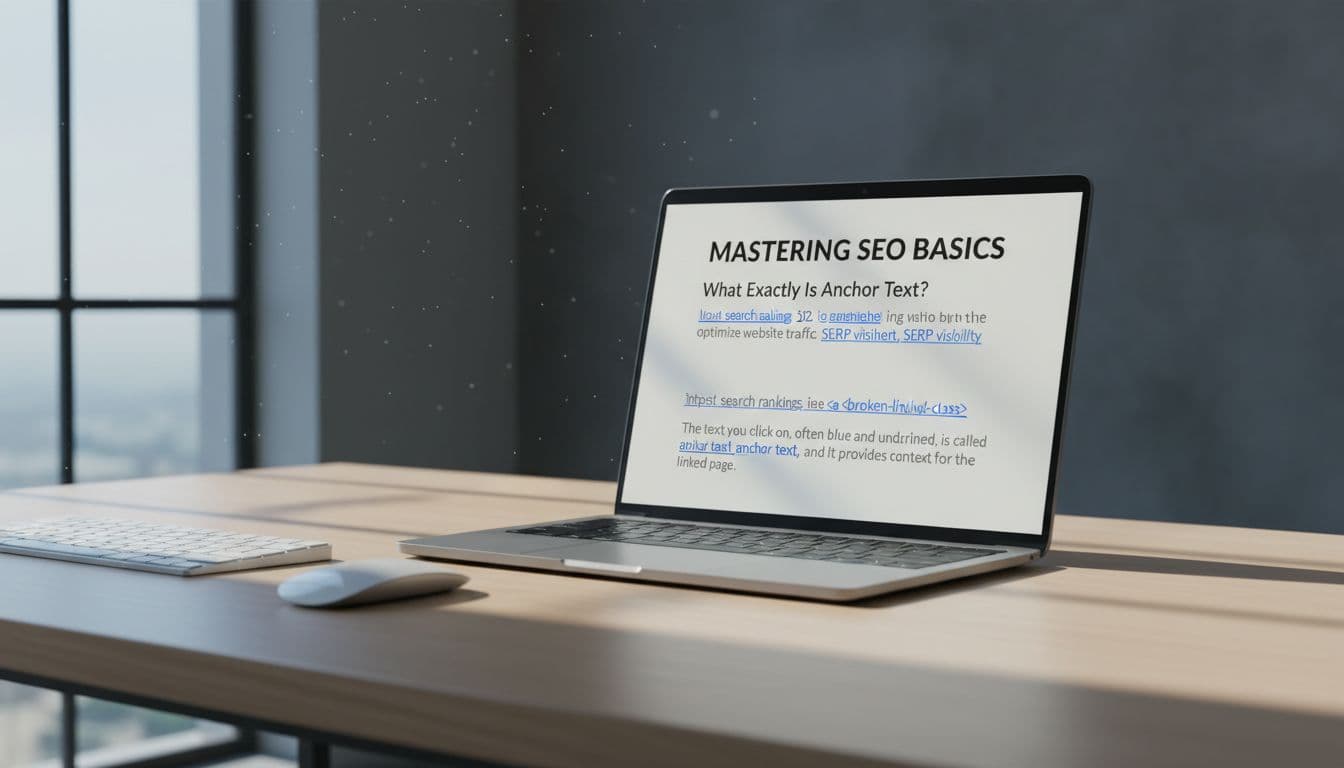
This applies to internal links, external links, and backlinks. The anchor doesn't control rankings by itself. Still, it adds context. It helps search engines connect topics, and it helps readers decide whether a click matches their need.
For another plain-English view, SE Ranking's anchor text guide explains the basics well. The main point is simple: anchor text should describe the page it points to, not act like filler.
Why anchor text matters for users, internal links, and backlinks
First, anchor text helps people scan fast. Most readers don't study every sentence. They skim, looking for useful paths. A link that says "download our local SEO audit template" is far more helpful than "click here."
Anchor text also sets expectations. When the link promise matches the page, trust holds. When the promise and page clash, frustration shows up fast.
Second, anchor text helps search engines understand relationships between pages. In 2026, Google looks beyond exact words. It reads the sentence around the link, the topic of the linking page, and the overall site structure. That's why semantic relevance matters. If a page is about keyword intent, the anchor and nearby copy should support that topic. Our guide on the importance of SEO keywords connects well here.
A contextual link inside a paragraph often says more than a random footer link, because the surrounding words reinforce the topic.
Good anchor text helps people first. Better SEO often follows because the path makes more sense.
Backlinks matter too, but we should keep expectations realistic. We don't control every anchor another site uses, and that's normal. A natural link profile often includes branded anchors, topic phrases, and plain-language mentions. What looks risky is repeating the same exact commercial anchor across many links. That pattern feels staged, not earned.
Good and bad anchor text examples
The best way to judge anchor text is simple. If we saw the link by itself, would we know what waits on the other side?
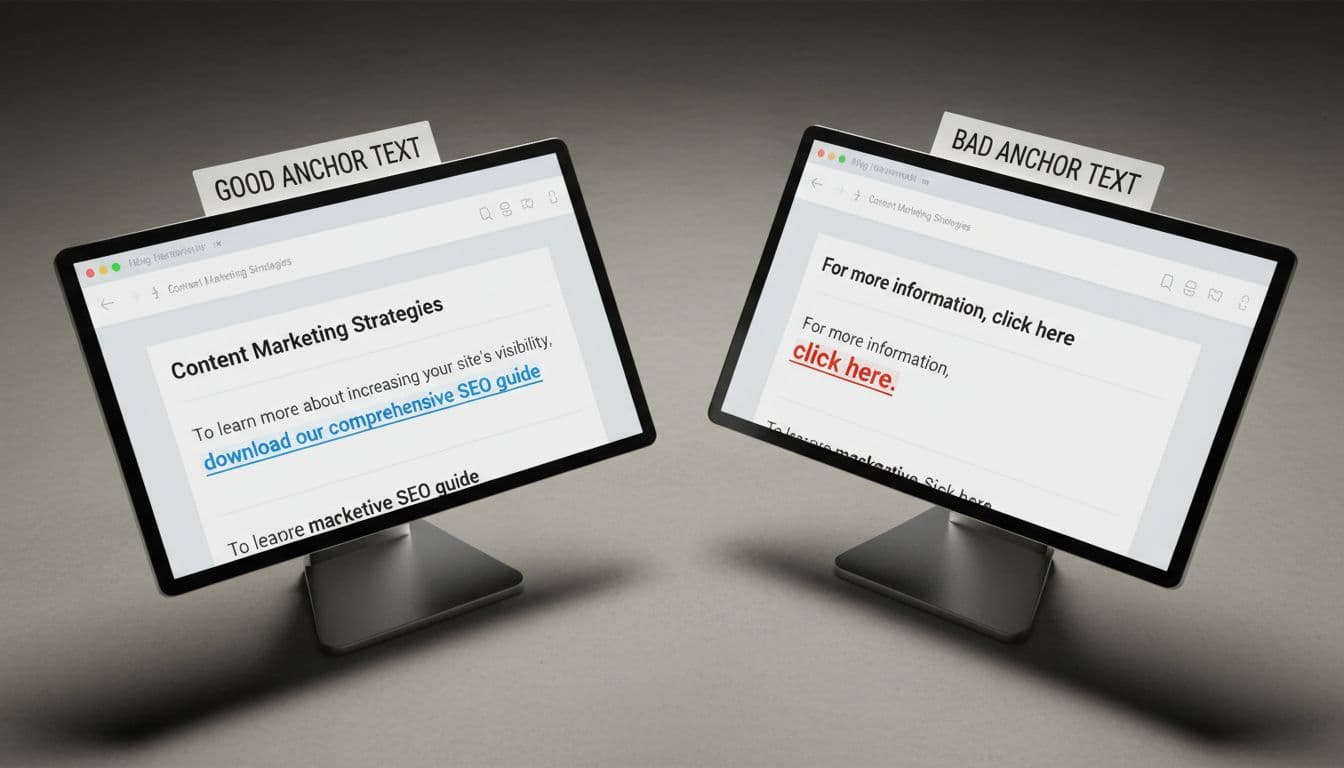
Here are a few quick comparisons.
| Weak anchor text | Better anchor text | Why it works |
|---|---|---|
| click here | local SEO pricing guide | It tells us what we'll open. |
| read more | canonical tag SEO explained | It matches the topic of the page. |
| best plumber Cincinnati | emergency plumbing services in Cincinnati | It sounds natural. |
| this article | beginner internal links checklist | It gives clear context. |
Good anchors share a few traits. They're descriptive, relevant to the destination, and natural within the sentence. They don't need to be long. A short phrase often does the job.
Bad anchors usually fail in one of four ways. They may be vague, stuffed with keywords, misleading, or repeated too often. For example, linking "best running shoes" to a general blog archive creates a mismatch. The words promise one thing, but the page gives another.
This is where many anchor text seo problems start. The issue isn't using keywords at all. The issue is forcing them into every link, even when the sentence reads badly.
If we want more pattern ideas, ClickMinded's beginner guide to anchor text shows useful examples.
Anchor text best practices for 2026
The safest rule is simple: write links the way we'd label a useful resource for a real person.
For internal links, we should match the anchor to the target page's real topic. If a page is a checklist, call it a checklist. If it's a service page, say that. We also want variation. Linking to the same page with slightly different, natural phrases is usually better than using one repeated keyword every time.
For backlinks, we shouldn't chase manipulative patterns. We don't need to hand every partner the same keyword-rich anchor. Editorial links with brand names, product names, or plain descriptive phrases often look more natural. As Upward Engine's 2026 best practices note, balance matters more than strict formulas.
If we're cleaning older content site-wide, a technical SEO checklist for small businesses can also help us spot crawl and structure issues that weak linking leaves behind.
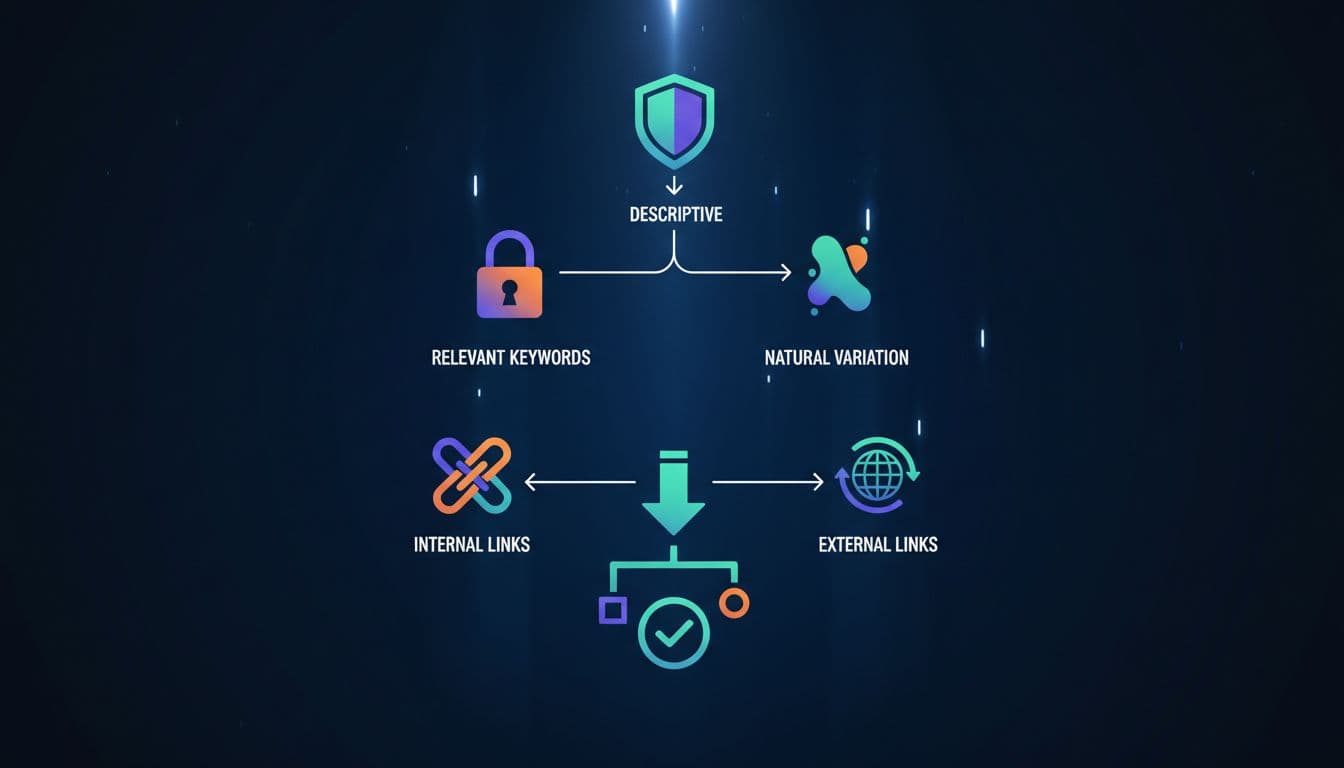
Near the end of an audit, we can run this short checklist:
- Use words that describe the page people will reach.
- Keep the anchor natural inside the sentence.
- Match the link to the topic and likely intent.
- Vary anchors across internal links and earned backlinks.
- Skip vague phrases when the destination isn't obvious.
- Avoid forcing exact-match keywords into every link.
A good link shouldn't feel like a trick. It should feel like a clear next step. That's the real job of anchor text.
If we replace vague anchors, cut forced exact-match patterns, and align links with page intent, we make the whole site easier to use and easier to understand. Start with a few high-value pages today, then read through them like a first-time visitor. The best anchors usually show up when we stop writing for algorithms and start writing for people.