
That short line under a Google result can win or lose the click. When we’re starting out, it looks minor, yet it’s often the first sales pitch searchers see.
When we look up meta descriptions seo tips, it’s easy to assume these lines raise rankings on their own. They don’t. Still, they can shape clicks, set clear expectations, and bring the right visitors to our pages. Here’s how to write them well.
What a meta description is, and where it appears
A meta description is a short summary stored in a page’s HTML, the code behind the page. Search engines often show it under the blue link on a search engine results page (SERP). In plain English, a SERP is the page of results we see after typing something into Google.
We can think of it like a movie trailer. It doesn’t change the movie, but it can convince people to watch.
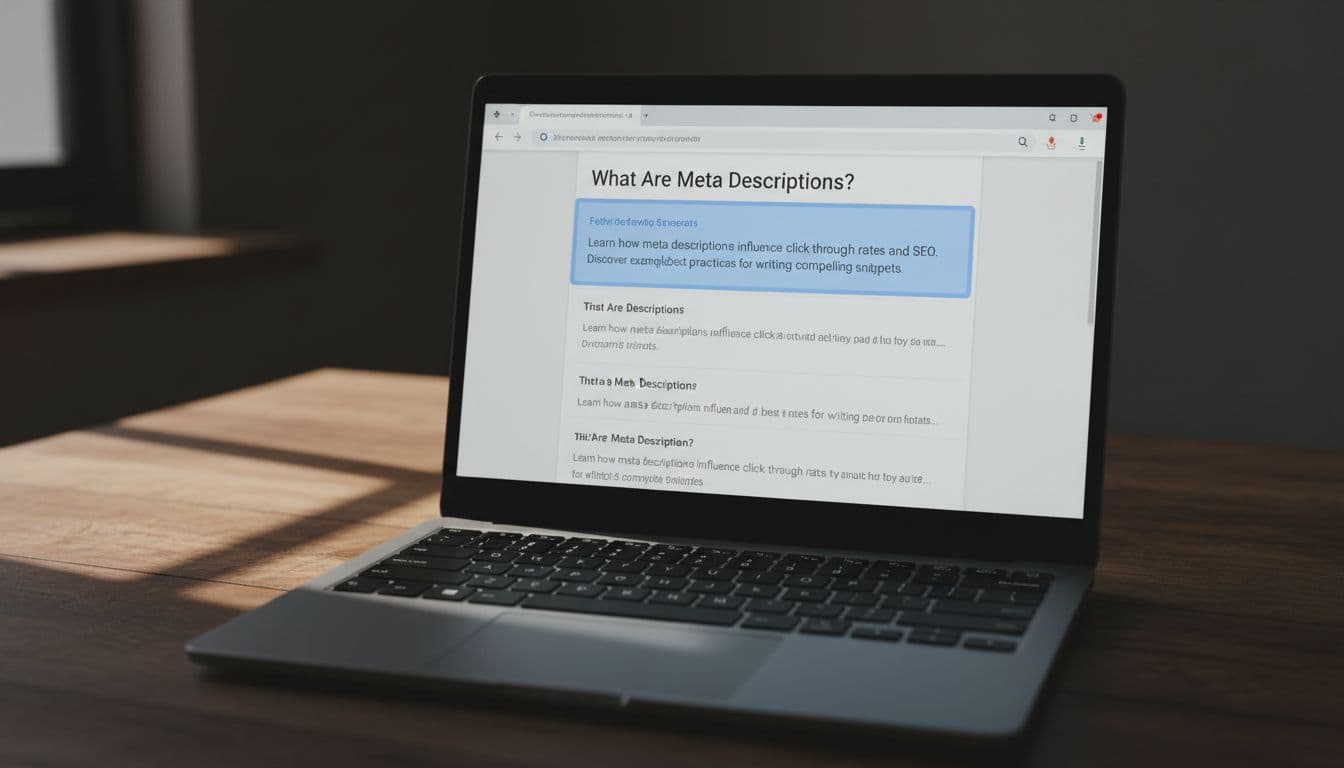
Most pages should have their own description. A homepage, service page, blog post, and product page all need different wording because each page solves a different problem.
Search engines don’t always use the exact text we write. If another sentence on the page matches the search better, Google may show that instead. That’s normal. Even so, writing a strong description still helps us guide the message.
Meta descriptions also work alongside title tags. The title is the headline in results. The description is the supporting sentence below it. If we want a broader refresher on how both fit together, this 2026 meta tags guide gives useful context.
Why meta descriptions still matter in 2026
Meta descriptions are not a direct ranking factor. In other words, Google doesn’t move a page up just because we wrote a better description.
They still matter because they affect click-through rate, or CTR. CTR is the share of people who see our result and choose it. If 100 people see our page and 6 click, our CTR is 6 percent.
That matters for a simple reason. Better descriptions can bring more visitors from the rankings we already have. If we’re working on proven SEO strategies to boost organic traffic, that’s a quick win worth taking.
A meta description doesn’t change where we rank by itself, but it can change whether people pick our result.
In 2026, the best descriptions do three things fast. They match search intent, show a benefit, and sound human. Search intent means the reason behind a search. Someone looking for “buy running shoes” wants products. Someone searching “how to clean running shoes” wants instructions. Our description should fit that goal.
How we write a meta description that earns clicks
Good meta descriptions are short, clear, and tied to the page. We don’t need fancy wording. We need the right message.
- Start with the page’s main goal.
Before writing anything, we ask what this page helps people do. Buy, learn, compare, book, or contact? The description should match that purpose. - Use the main phrase naturally.
If the page targets “meta descriptions for SEO,” we can include that once in plain language. Forced repetition looks weak. If we need help choosing terms, these free and paid keyword research options can point us in the right direction. - Show a clear benefit.
Tell searchers what they’ll get. Will they save time, learn a step, compare options, or avoid mistakes? Benefits earn clicks faster than vague lines. - Keep it tight.
In 2026, a safe target is about 140 to 155 characters. Some snippets get cut shorter on mobile, so short and punchy usually works better than squeezing in every detail. - Make every page unique.
Duplicate descriptions confuse searchers and waste a good chance to sell the page. Each page needs its own angle.
Here’s a simple example for a beginner blog post:
Weak: “Learn about meta descriptions and SEO on our website.”
Better: “Learn how to write meta descriptions that attract clicks, match search intent, and improve search result visibility.”
We should also read the line out loud. If it sounds robotic, searchers will feel that too.
Common mistakes that make searchers scroll past
The biggest mistake is writing something bland. “Welcome to our website” says almost nothing. Searchers skim fast, so empty words disappear.
Another problem is stuffing in keywords. Repeating the same phrase doesn’t make the snippet stronger. It makes it harder to read. Clear language beats awkward repetition every time.
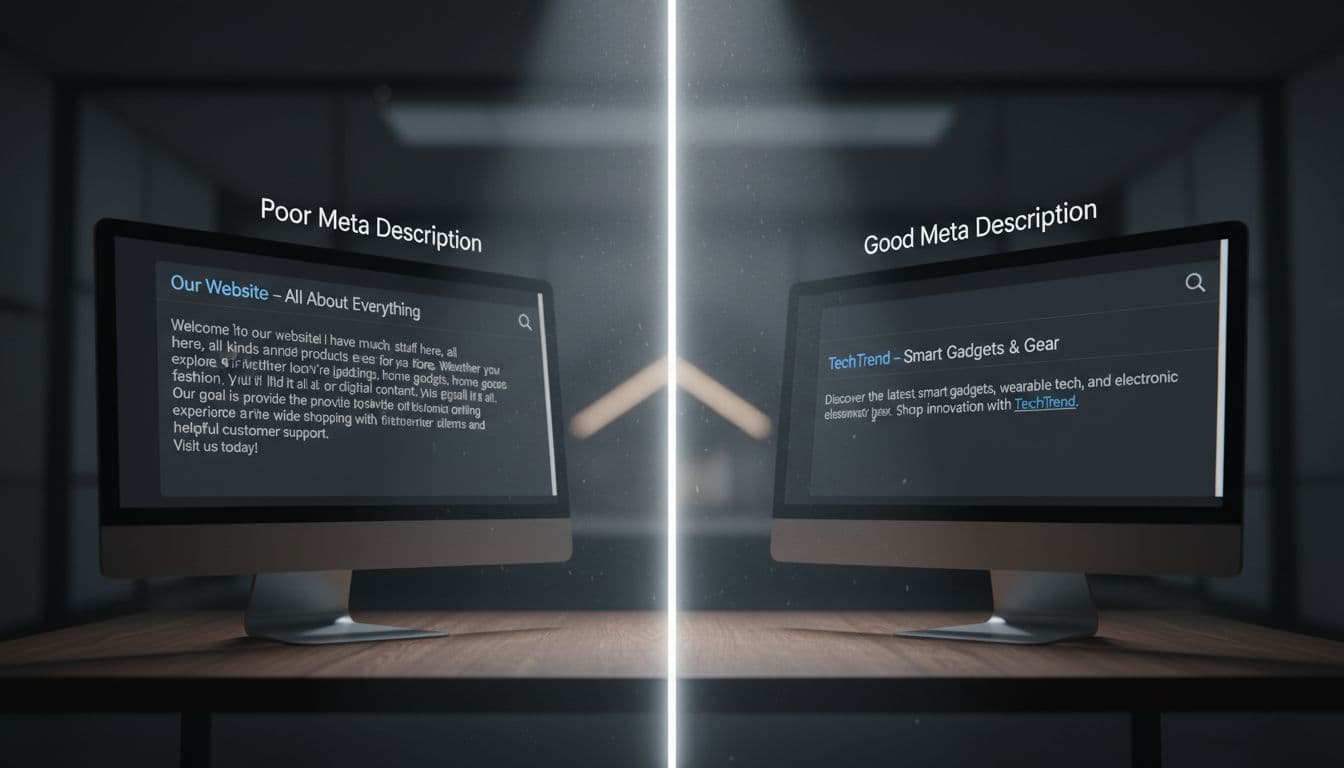
Length can also hurt us. If the description runs too long, Google may cut it off. Then the most useful part may never show. Keep the strongest words early.
Last, we shouldn’t promise what the page doesn’t give. If the snippet says “step-by-step template” but the page offers only general tips, people bounce. That’s a lost click, not a win.
A good check is simple. Would we click this result if we saw it among ten others? If not, we need a rewrite. For another current summary, these 2026 best practices for title tags and descriptions line up with the same approach.
A quick checklist we can use before publishing
Before we hit publish, we can run through this short list:
- Does it match the page topic?
- Does it promise a clear benefit?
- Does it sound natural out loud?
- Is it short enough to avoid most cutoffs?
- Is it different from other pages on the site?
If we can say yes to all five, we’re in good shape.
That little line under our search result isn’t magic, yet it still matters. When we write a clear, honest, benefit-first meta description, we give searchers a better reason to choose us.
The next step is simple. Pick one page on our site, rewrite its description today, and see if we can make the click feel easier.