A lot of beginners think backlinks are magic. They’re not. The phrase backlinks SEO shows up everywhere, yet the core idea is simple.
A backlink is one website linking to another. In 2026, those links still matter, but they’re only one ranking signal among many, along with content quality, page experience, search intent, and site structure.
If we keep that balance in mind from the start, backlinks make a lot more sense.
What backlinks are, and why they still matter
We can think of a backlink like a recommendation. If a trusted site points readers to our page, search engines may treat that as a sign that our page is worth attention.
That doesn’t mean every link helps. A link from a respected industry blog is different from a random link on a low-quality directory. Relevance matters. Trust matters. Context matters too.
This is why backlinks still show up in ranking discussions. Search engines use links to discover pages, understand relationships between sites, and judge whether a page has earned attention from others. If we want a clearer picture of that process, it helps to review how search engines work.
Still, links don’t carry a weak page on their own. If our content is thin, slow, or off-topic, backlinks won’t save it. That point matters even more in 2026, because Google keeps rewarding pages that solve real problems instead of pages that look good only on paper.
Here’s the simple takeaway: backlinks can support rankings, but they work best when the page already deserves to rank.
What makes a backlink good or bad in 2026
The biggest shift in recent years is easy to sum up. Quality beats quantity. As of April 2026, the March 2026 Spam Update tightened Google’s detection of manipulative link schemes, which lines up with summaries of Google’s backlink policy in 2026.
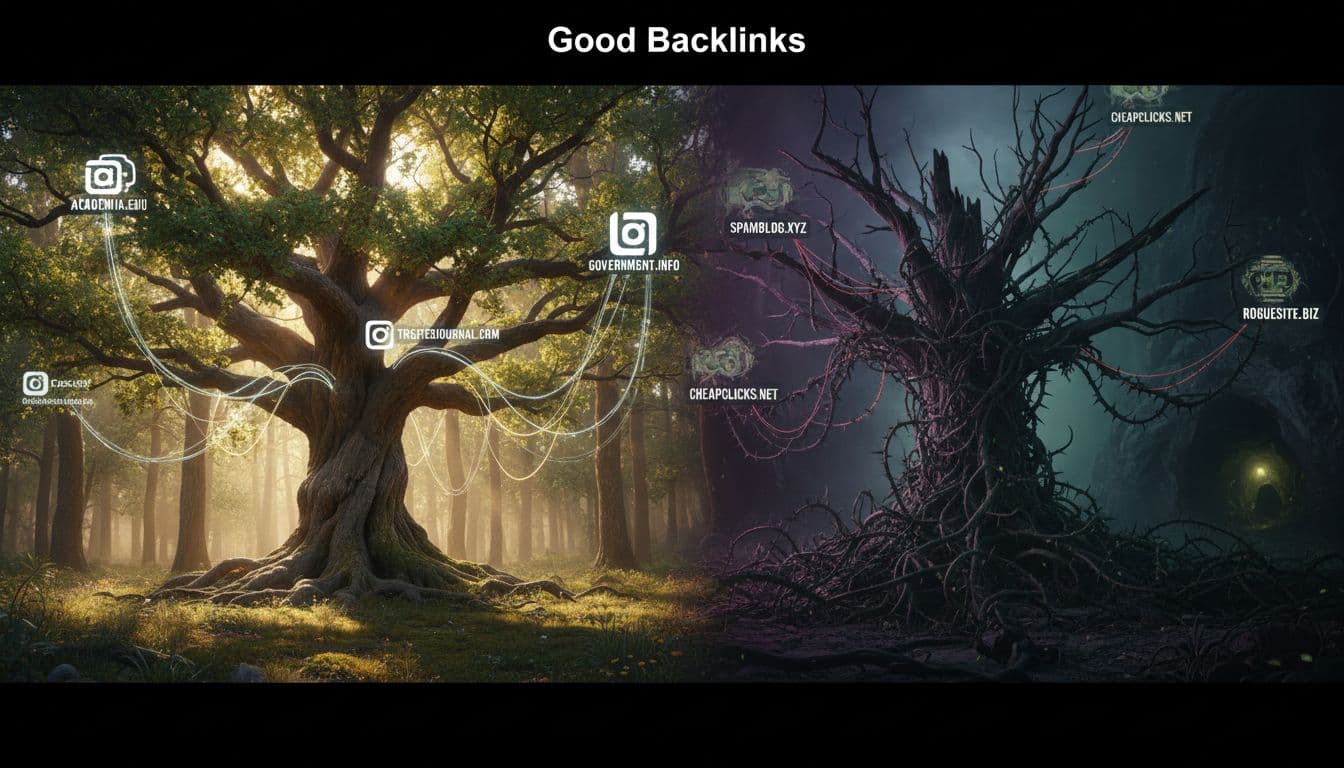
A good backlink usually comes from a real site, on a relevant topic, inside useful content, and with a natural reason to exist. A bad backlink often looks forced, out of place, or built only to pass ranking value.
This quick table makes the difference easier to see:
| Example | Why it’s good or bad |
|---|---|
| A local news site cites our community guide | Relevant, editorial, real audience |
| An industry blog links to our original data | Strong context and trust |
| A gambling site links to our plumbing page | Unrelated and suspicious |
| A paid link hidden on a junk blog | Manipulative and risky |
The pattern is clear. Good links make sense to humans first.
There’s another change beginners should know. Nofollow, sponsored, and UGC links are treated as hints, not hard barriers. So a nofollow link from a respected site can still bring traffic, visibility, and trust signals. On the other hand, a dofollow link from a spam network can do more harm than good.
A healthy backlink profile looks natural, mixed, and relevant, not perfect or overly engineered.
How we can earn backlinks safely
Beginners often ask the wrong question first. Instead of asking, “How do we get links fast?” we should ask, “Why would anyone link to this page?”
That small shift changes everything. The safest links come from pages worth citing. For example, we can publish a useful local guide, a simple comparison, original stats, a case study, or a tool that saves time. When the page helps people, outreach starts to feel less like begging and more like sharing something useful.
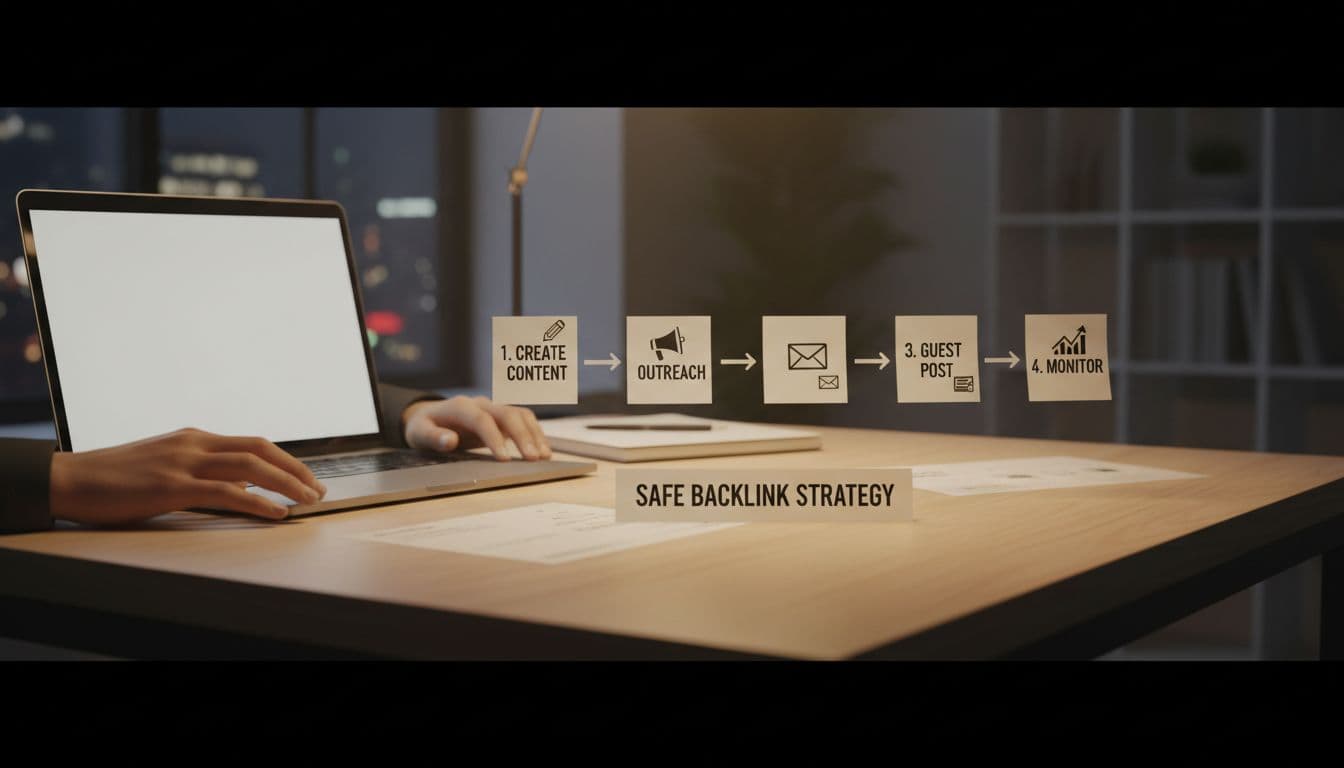
Next, we reach out with a real reason. That might mean telling a local organization about a resource page, offering a thoughtful guest article, or showing a writer data they can cite. Personal, relevant outreach still works. Spray-and-pray email blasts don’t.
At the same time, we should support external links with strong site structure. If a good backlink lands on one page, smart internal linking SEO helps that value move to related pages across our site.
A beginner-safe checklist looks like this:
- Publish one page that solves a clear problem better than what’s already out there.
- Reach out only to sites that match our topic, location, or audience.
- Use natural anchor text and avoid forcing exact-match phrases.
- Mark paid placements properly as sponsored.
- Review new links each month and stop any spammy tactics early.
If we want more ideas, this practical backlink guide for 2026 matches what works now: useful content first, then targeted promotion.
Backlink myths beginners should drop
One myth refuses to die: more links always win. In reality, one relevant link from a trusted site can beat dozens of weak ones.
Another myth says nofollow links are useless. They aren’t. They can send real visitors, build awareness, and help create a natural link profile.
The biggest myth is that backlinks alone decide rankings. They don’t. If our pages miss search intent, load slowly, or target the wrong topics, rankings can stall even with decent links. That’s why we should track links alongside content performance and keyword rankings in SEO.
Cheap link packages, private blog networks, hacked links, and mass directory blasts belong in the “don’t touch” pile. Those tactics were shaky before, and in 2026 they’re even harder to justify.
Backlinks aren’t magic votes. They’re trust signals, and they work best when our page has earned that trust.
If we stay relevant, avoid shortcuts, and build pages people want to cite, backlinks become far less confusing.
Let’s pick one page this week, make it more useful, and give the right sites a real reason to link to it.